Tank pads can settle when the supporting soil compresses, shifts, or washes away. Heavy tank loads, poor initial compaction, erosion, changing moisture levels, and underground voids are common contributors.

Home » Commercial Concrete Lifting » Water Tanks & Storage Tank
Water tanks and storage tanks place significant weight on the concrete slabs beneath them. When soil settles, erodes, or develops voids below the pad, the concrete can begin to sink or tilt. Even small changes in elevation can affect tank support, drainage, piping connections, and surrounding concrete.
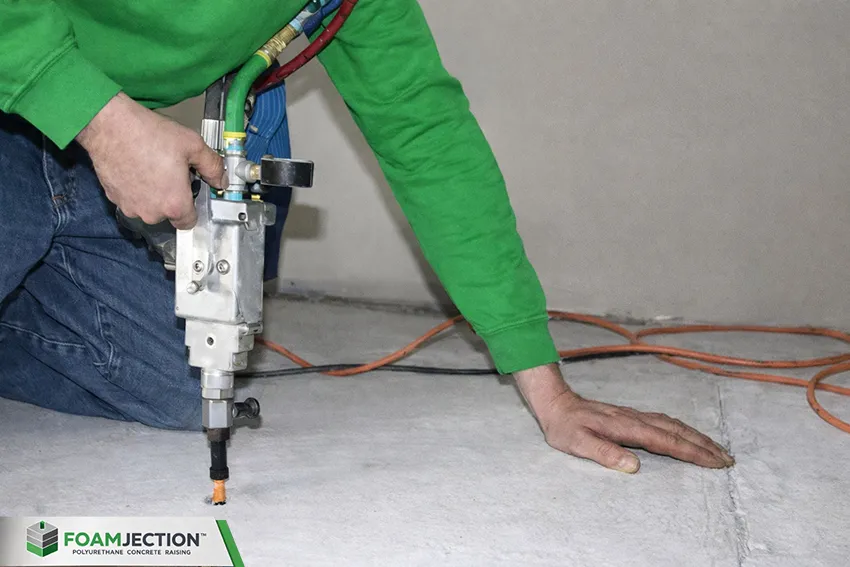
Foamjection provides polyurethane concrete lifting and stabilization for water tank and storage tank slabs. High-density polyurethane foam is injected beneath the concrete to fill voids, restore support, and carefully lift settled areas when site conditions allow.
For industrial facilities, agricultural properties, water treatment operations, and commercial sites, foam lifting can provide a faster and less disruptive alternative to removing and replacing an existing concrete pad.
Tank slabs must support concentrated weight for long periods of time. If the soil beneath the concrete loses strength or washes away, the pad may no longer have consistent support.
Common causes include:
As support beneath the pad changes, sections of concrete may settle at different rates, causing the slab to become uneven or tilted.
You may need tank pad leveling or stabilization if you notice:
Because storage tanks can place substantial weight on the slab, settlement should be evaluated before movement becomes more severe.
If settlement extends to other heavy-use concrete around the property, grain bin concrete leveling, factory floor leveling, or soil stabilization may also be needed to restore support beneath connected slabs and surrounding areas.
Foamjection stabilizes settled tank pads by injecting high-density polyurethane foam beneath the concrete. The expanding foam fills hidden voids, restores support, and can carefully lift settled sections of the slab when conditions allow.
Polyurethane foam cures quickly, helping reduce the downtime associated with traditional concrete removal and replacement.
Facility managers and property owners choose polyurethane concrete lifting because it addresses problems beneath the existing concrete without requiring major excavation or slab replacement.
The lightweight foam can reach irregular voids beneath the pad while adding little additional weight to already weak soils.
For structurally sound tank pads experiencing settlement or loss of support, polyurethane injection can provide a practical repair option.
Tank pads can settle when the supporting soil compresses, shifts, or washes away. Heavy tank loads, poor initial compaction, erosion, changing moisture levels, and underground voids are common contributors.
In some cases, the slab can be stabilized or lifted while the tank remains in place. This depends on the tank load, amount of settlement, slab condition, and other site factors. The property should be evaluated before determining the appropriate repair method.
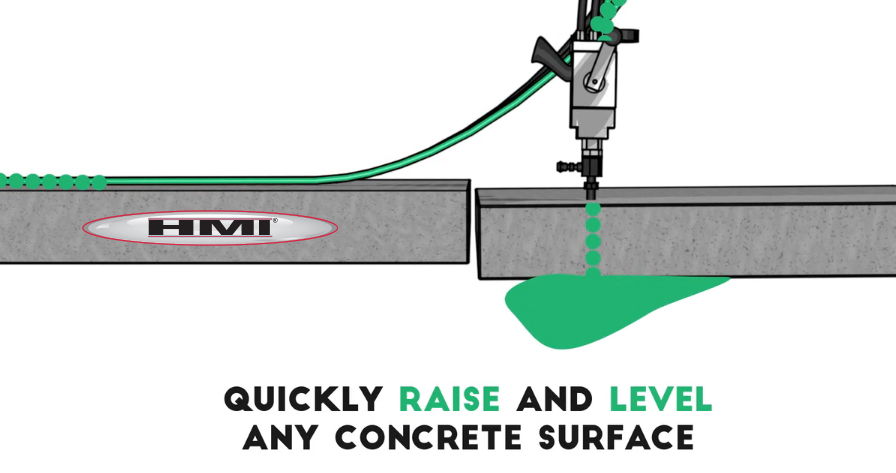
High-density polyurethane foam is used for commercial and industrial concrete stabilization applications. The appropriate material and repair plan depend on the loads, slab design, soil conditions, and amount of settlement.
Polyurethane foam expands after injection, allowing it to move through irregular spaces and fill voids beneath the concrete. This can restore support where soil has eroded or pulled away from the slab.
Depending on the condition of the slab and structure, polyurethane lifting may be able to raise settled sections and improve the slab’s elevation. An inspection is needed to determine how much correction is appropriate.
If slab settlement is contributing to alignment problems, correcting the slab elevation may help. However, piping and structural systems should be evaluated separately to determine whether additional work is required.
Project time depends on the size of the slab, amount of settlement, access, and site conditions. Polyurethane foam cures quickly, which can reduce repair time compared with removing and replacing concrete.
Operational requirements vary by project. Polyurethane injection requires much less demolition than replacement, but whether equipment or tanks can remain operational depends on the load, repair area, and site safety requirements.
If settlement has created low areas on the concrete, lifting those sections may help restore the intended slope. Overall drainage also depends on surrounding grades and drainage systems.
Yes. Polyurethane injection can be used to fill voids and stabilize weak areas beneath concrete. More extensive soil or structural problems may require additional engineering or repair methods.
Polyurethane concrete lifting may be appropriate for concrete pads supporting water tanks, agricultural storage tanks, industrial storage systems, and other heavy-use applications. Suitability depends on the individual slab and structure.
Request a free estimate and provide information about the tank, slab, visible settlement, and property. A local Foamjection professional can evaluate the conditions and determine whether polyurethane lifting or stabilization is appropriate.
Foamjection helps homeowners with expert foam concrete leveling throughout.