Concrete sport courts can settle when the soil beneath the slab loses support. Poor compaction, water erosion, drainage problems, soil movement, and underground voids are common causes.

Home » Commercial Concrete Lifting » Sport Court
Uneven concrete on basketball courts, tennis courts, pickleball courts, and other recreational surfaces can create trip hazards, drainage problems, and unsafe playing conditions. When sections of a court sink or shift, players may notice uneven footing, standing water, or cracks that affect how the surface performs.
Foamjection uses polyurethane concrete lifting, also known as polyjacking, to raise and stabilize settled sport courts at schools, parks, recreation centers, apartment communities, HOAs, and private facilities.
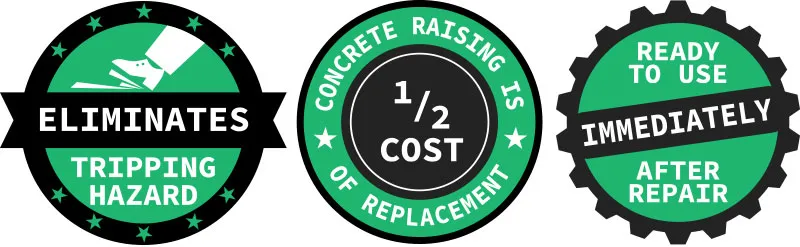
Our foam concrete leveling process helps restore a more even playing surface while preserving structurally sound concrete—often at up to 50% less than the cost of replacement, with minimal downtime.
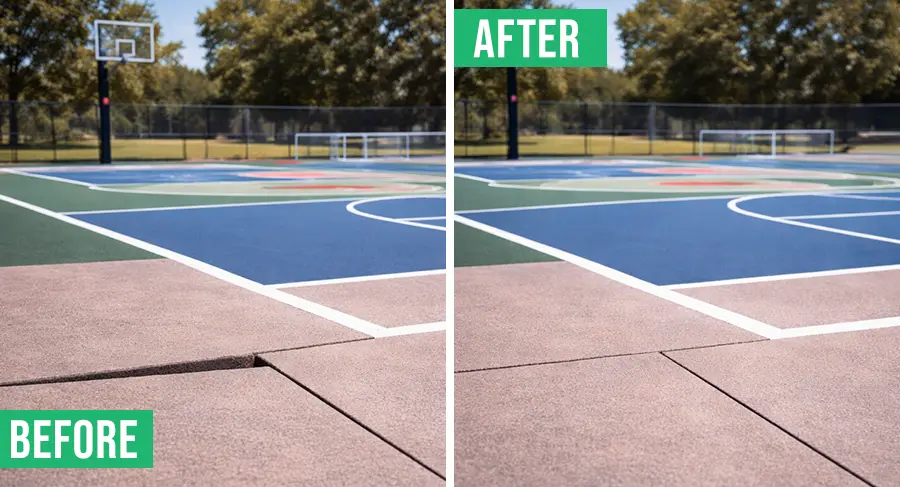
Concrete sport courts depend on stable, properly compacted soil to maintain a smooth playing surface. Over time, water movement, soil settlement, and changing ground conditions can cause sections of the court to lose support.
Common causes include:
When the soil beneath the court shifts or washes away, sections of concrete may sink, tilt, or separate from adjoining slabs.
Even small changes in elevation can affect how a sport court looks, drains, and performs.
Watch for:
Fixing settlement early may help prevent additional damage and reduce the need for more extensive concrete repairs.
If settlement also affects surrounding recreational areas, apartment and HOA concrete leveling, parking lot leveling, or interior floor leveling may be needed to restore safer, more even surfaces throughout the property.

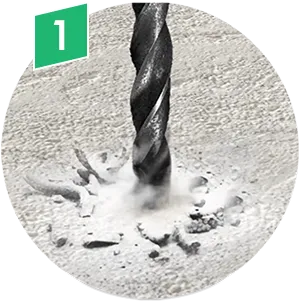
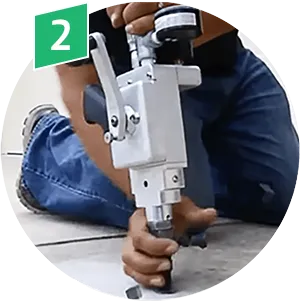
Foamjection lifts settled sport court concrete by injecting high-density polyurethane foam beneath the slab. The foam expands to fill voids, restore support, and carefully raise uneven concrete toward its intended elevation.
Many sport court concrete leveling projects can be completed efficiently, with the foam curing quickly. Additional surface repairs or coatings may be needed before the court is ready for play.
Foamjection’s polyurethane lifting process may be suitable for several types of concrete recreational surfaces, including:
The condition of the concrete, surface coating, and court design will determine whether foam lifting is appropriate.
Schools, recreation departments, HOA boards, and property managers choose polyurethane concrete lifting because it can repair settled concrete without removing and rebuilding an entire court.
Instead of major demolition and replacement, foam lifting targets the unsupported sections beneath the existing slab.
For sport courts with structurally sound concrete, foam jacking can be a practical option before considering complete replacement.
Yes. If the basketball court has a structurally sound concrete slab, polyurethane foam may be used to lift settled sections and restore support beneath the surface.
Polyurethane concrete lifting may be suitable for tennis and pickleball courts built on concrete slabs. Courts with asphalt surfaces or specialized construction may require different repair methods.
Foam lifting addresses settlement and lost support beneath concrete. Existing cracks may still need separate repair, and the playing surface may require resurfacing after leveling.
In some cases, yes. Raising settled sections can help restore the court’s intended slope and reduce low spots where water collects. Other drainage problems may require additional repairs.
If the concrete remains structurally sound, polyurethane lifting may be faster and less expensive than replacement. Severely damaged slabs or courts with widespread surface problems may require rebuilding or resurfacing.
Many projects can be completed within hours, depending on the court size and amount of settlement. Additional time may be needed for crack repairs, coatings, or resurfacing.
Polyurethane foam cures quickly, but the court should only reopen after the surface has been inspected and any required patching, crack repairs, or resurfacing has been completed.
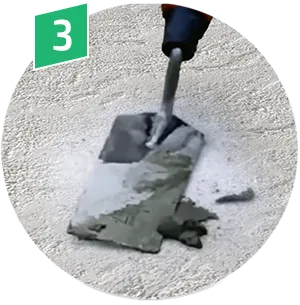
Small access holes are drilled and patched after lifting. Depending on the court’s surface coating and finish, additional resurfacing may be needed to restore a consistent playing surface.
Yes. Polyurethane injection can target specific settled sections. The amount of lifting possible depends on the slab condition, surrounding concrete, and required surface tolerances.
Yes. Raising settled concrete can reduce uneven transitions and elevation differences that create trip hazards. Final surface conditions should be checked before the court returns to use.
Request a free estimate and provide information about the court, the concrete surface, and the settlement you are seeing. Foamjection can connect you with a local concrete lifting professional to evaluate the project.

Foamjection helps homeowners with expert foam concrete leveling throughout.
