
Home » Commercial Concrete Lifting » Retaining Walls
Settled concrete near a retaining wall can create serious drainage, safety, and stability problems. Uneven walkways, patios, steps, slabs, and soil voids around retaining walls can allow water to collect, wash out support, and place extra pressure on nearby structures.
Foamjection helps stabilize settled concrete and fill voids near retaining walls using high-density polyurethane foam. Our process is fast, clean, and designed to restore support beneath concrete without the mess of major excavation or full slab replacement.

Concrete near retaining walls often sinks because the soil beneath the slab has shifted, settled, or washed away. Retaining walls are built to hold back soil, but water movement, poor drainage, weak fill, and erosion can still create voids around nearby concrete.
Common causes include:
When the soil below the concrete loses support, slabs can settle, tilt, crack, or pull away from the retaining wall.
You may need concrete lifting or void filling near a retaining wall if you notice:
Fixing these issues early can help reduce trip hazards, improve drainage, and prevent more soil from washing out beneath the concrete.
If the settlement affects other connected areas, related services like patio leveling, walkway and sidewalk leveling, steps leveling, concrete slab leveling, and void filling may also be needed.
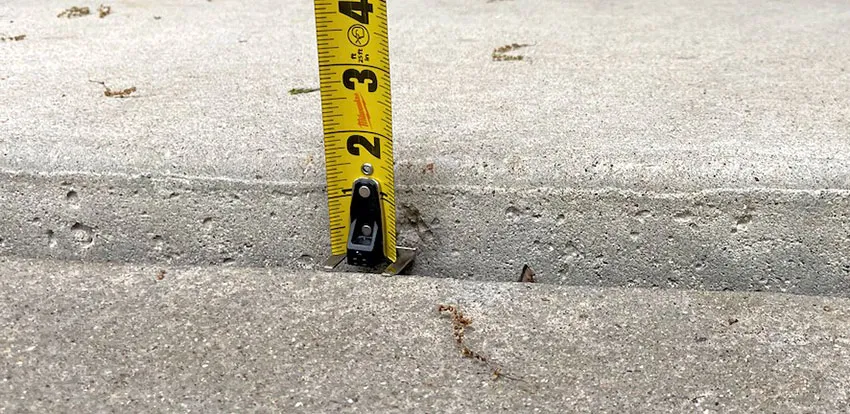
Foamjection repairs settled concrete near retaining walls by injecting high-density polyurethane foam beneath the slab. The foam expands into empty spaces, fills voids, and helps lift and stabilize the concrete.
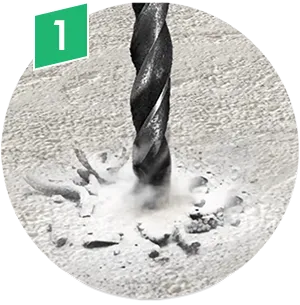
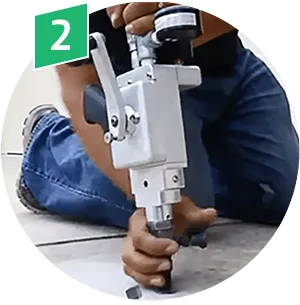
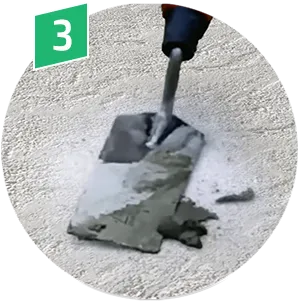
Our process is simple:
This method helps restore support beneath the slab without removing large sections of concrete or digging up the area around the retaining wall.

Property owners choose Foamjection because our process helps fix the problem below the slab, not just the surface. Instead of tearing out concrete near a retaining wall, we can often lift and stabilize the existing slab with less disruption.
Retaining wall concrete leveling helps:
When concrete settles near a retaining wall, the issue should not be ignored. Water and soil movement can continue to make the problem worse over time.
Foamjection does not replace or rebuild retaining walls. Our service focuses on lifting settled concrete and filling voids around retaining walls. If the wall itself is leaning, cracking, bowing, or failing, a retaining wall contractor or structural professional may need to inspect it.
Yes. Polyurethane foam can be injected beneath concrete slabs near retaining walls to fill empty spaces and restore support. This is helpful when water or soil movement has created voids under patios, sidewalks, steps, or concrete slabs.
In many cases, yes. If the concrete slab is still in good condition but has settled or tilted, polyurethane foam may be able to lift and stabilize it. The final result depends on the slab condition, soil support, and how much movement has occurred.
Water may pool near a retaining wall when concrete has settled and created low spots. Poor grading, clogged drains, downspouts, and weak soil can also cause drainage problems. Concrete lifting can help correct low slabs, but drainage issues should also be addressed.
Yes, when used properly. Polyurethane foam is lightweight and expands beneath the slab to fill voids without adding heavy material to already weak soil. A specialist can review the area and determine if foam lifting is the right option.
Concrete lifting is often faster, cleaner, and less disruptive than replacement. Replacement may require demolition, hauling, and working close to the retaining wall. Foam lifting can often stabilize the existing slab with small injection holes and less mess.
Yes. Patios near retaining walls can often be lifted if the concrete is mostly intact but has settled. Foam injection fills voids beneath the slab and helps raise the patio back toward a safer, more usable surface.
Yes, settled steps near a retaining wall may be lifted if the concrete is stable enough for repair. Uneven steps should be checked early because they can create safety risks and allow more water to enter around the slab.
Foam fills existing voids and helps stabilize the slab. However, if water keeps draining toward the same area, future soil movement may still happen. For best results, the drainage problem should also be corrected.
Most projects can be completed in a few hours, depending on the size of the area and the amount of settlement. Many surfaces can be used again the same day after the lifting and patching process is complete.
Your concrete may be a good candidate if it is mostly intact but has sunk, tilted, separated, or created a trip hazard. If the slab is badly broken or the retaining wall itself is failing, another repair may be needed first.
Call Foamjection at 866-913-6519 or request a free quote online. Photos of the retaining wall area, sunken concrete, gaps, cracks, water pooling, and nearby slabs can help speed up the estimate process.
Foamjection helps homeowners with expert foam concrete leveling throughout.
