
Sunken driveway, sidewalk, steps or pool deck? Foamjection lifts and levels settled concrete in Myrtle Beach with high-density polyurethane foam, through small holes and with no tear-out. Most jobs take a few hours, and the surface is often ready to use the same day.
Prefer to talk? Call 866-913-6519
Reviewed by the Foamjection Team, powered by HMI · Updated October 29, 2026 · About Foamjection
Myrtle Beach is built on sand. When rain runs off a roof or down a driveway, it can carry sand out from under the slab edges. Over time the driveway tips toward the street or the yard, and the garage apron drops and leaves a lip at the door.
A raised or sunken panel is a common trip hazard, especially on walks that see a lot of foot traffic. In Myrtle Beach, owners and occupants of a property are responsible for the sidewalk next to it, so a panel that has dropped in front of your home is worth a look.
Pool decks and patios are everywhere in Myrtle Beach, and most of the year’s rain falls in the warm months, when these slabs get the most use. Splash-out, roof runoff and summer storms keep washing sand from under the edges. Decks pull away from the pool, and patios hold puddles or slope back toward the house.
In the low, flat parts of the area, the ground water sits close to the surface for part of the year and soil under small slabs stays soft. Front stoops lean or separate from the house, and AC pads and entry slabs settle out of level.
Real Foamjection lifts on the kinds of slabs we fix for Myrtle Beach homeowners. Small holes, no tear-out.


Foamjection is powered by HMI, which provides the equipment, training and systems behind every lift. Here’s what you can expect when you call us about your Myrtle Beach concrete:

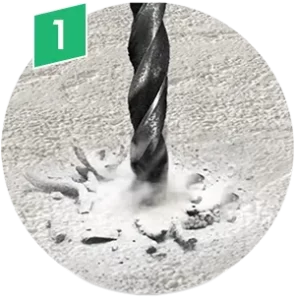 Drill Small Holes
Our crew drills small 5/8″ holes in key areas of the slab.
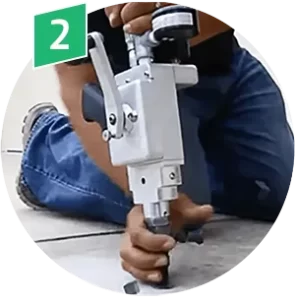 Inject High-Density Polyurethane Foam
This is the core of polyurethane concrete lifting — the foam expands beneath the slab, fills voids, stabilizes loose soils, and delivers a controlled slab lifting process.
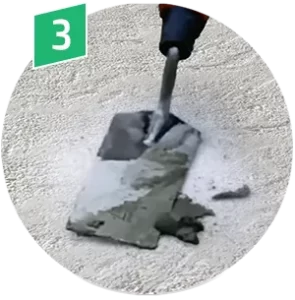 Patch & Use the Same Day
Once the slab reaches the correct height, holes are patched and the area is often ready to use within hours.
Tell us what’s sinking and where. A local pro will follow up with a free, no-pressure estimate.
Myrtle Beach sits on the flat, sandy coast of Horry County. The USDA soil survey of the county maps the strip along the ocean as sand dunes and ridges, with soils such as Lakeland, Leon and Newhan that are sandy throughout, and notes that most of this area has been developed for homes, businesses and recreation. Inland near Myrtle Beach, the survey also maps low, flat areas where the water table is very shallow, some with a clayey subsoil that can pond and flood. The county gets about 51 inches of rain a year, with about 60 percent of it falling from April through September.
Sand has nothing holding it together. When water from a downspout, a summer storm or a sprinkler runs along the edge of a slab, it carries sand out from underneath and leaves a hollow. The concrete is still in one piece, but nothing is holding it up, so it drops. In the low, wet areas, the soil under a slab stays soft for long stretches, and the survey rates the clayey soils there as having low strength and a tendency to shrink and swell, both of which let slabs settle.
Foam fills those hollows and firms up the loose soil around them, and because it is light, it doesn’t add much weight to soil that’s already struggling.
Every service below uses the same foam lifting process, sized to the slab. Not sure which one you need? Describe the problem on the estimate form and a local pro will help you figure it out.
Under Section 17-4 of the City Code, owners and occupants of property in Myrtle Beach are responsible for maintaining the adjacent public right-of-way. In the city’s words, “they also are responsible for the adjacent sidewalk, grass strip, curb-and-gutter and right-of-way up to the edge of the street.” See the City of Myrtle Beach notice on property owners’ right-of-way responsibilities. If a panel is intact and just sunken or tilted, ask us whether lifting is an option before you replace it.
Yes. The usual problem in sand is water washing it out from under the slab and leaving a hollow. The foam expands into those empty spaces and helps stabilize the loose sand around them. Steering water away from the slab edge helps the repair last.
Concrete jacking, also called slabjacking or mudjacking, pumps a heavy cement slurry under the slab through larger holes. Foam jacking uses high-density polyurethane foam through small 5/8 inch holes. The foam is much lighter, cures quickly, and most slabs are ready to use the same day.
It helps. In Myrtle Beach’s sandy soil, water pouring off a roof or running along a slab edge is a common reason sand washes out and slabs settle, and most of the year’s rain comes in the warm months. Extending downspouts and keeping runoff and pool splash-out away from slab edges keeps new hollows from forming after the concrete is lifted.
Yes. Foamjection also serves nearby communities including Conway, Georgetown, Marion, Dillon, Florence and Lake City. You’ll find links to each area at the bottom of this page.
Fill out the estimate form on this page or call 866-913-6519. Estimates are free and no-pressure, and warranty details are explained before any work begins.
Foamjection also lifts and levels concrete in these communities near Myrtle Beach:
