
Sunken driveway, sidewalk, steps or patio? Foamjection lifts and levels settled concrete in Charleston with high-density polyurethane foam, through small holes and with no tear-out. Most jobs take a few hours, and the surface is often ready to use the same day.
Prefer to talk? Call 866-913-6519
Reviewed by the Foamjection Team, powered by HMI · Updated October 29, 2026 · About Foamjection
A large share of the Charleston peninsula was once creek and marsh. The Historic Charleston Foundation says a third or more of the peninsula is made land, including ground around Murray Boulevard, Lockwood Boulevard and east of East Bay Street. Loose, mixed fill like that can keep settling for years, and walk panels on top of it tip, sink and leave trip hazards.
Charleston is low and flat, and the ground stays wet for long stretches. When storm water runs along a driveway edge or sits against it, it carries sand out from underneath. The slab drops at the edges or at the garage, and a lip forms where the apron meets the floor.
Backyard patios and pool decks around Charleston often sit on sandy soil. Water from roofs, pools and sprinklers soaks in at the joints and edges and washes that sand away. Panels start to tilt, hold puddles, or slope back toward the house.
Concrete steps and stoops are heavy and rest on a small patch of ground. When the soil under them softens or washes out, the steps lean or separate from the house, leaving a gap that lets more water in.
Real Foamjection lifts on the kinds of slabs we fix for Charleston homeowners. Small holes, no tear-out.
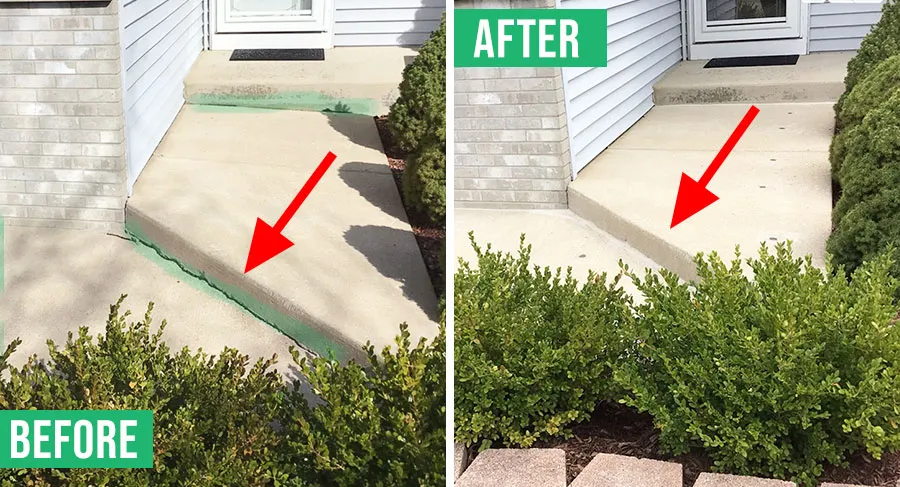
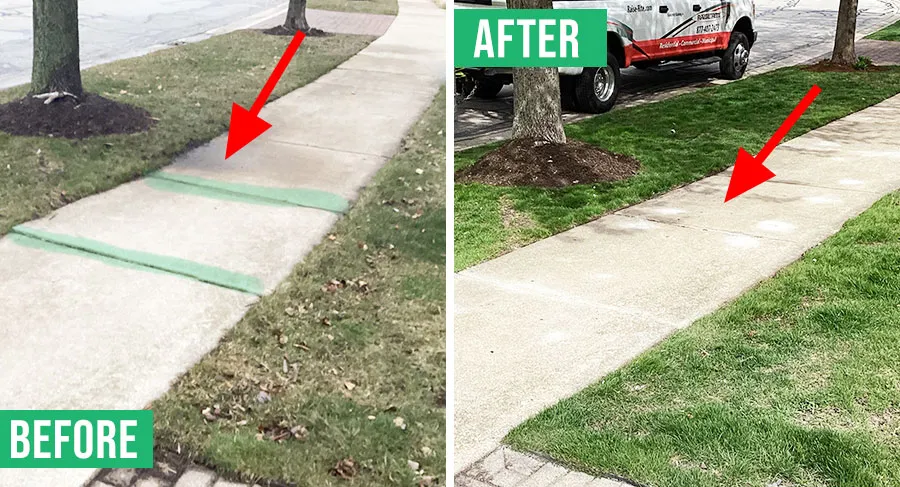
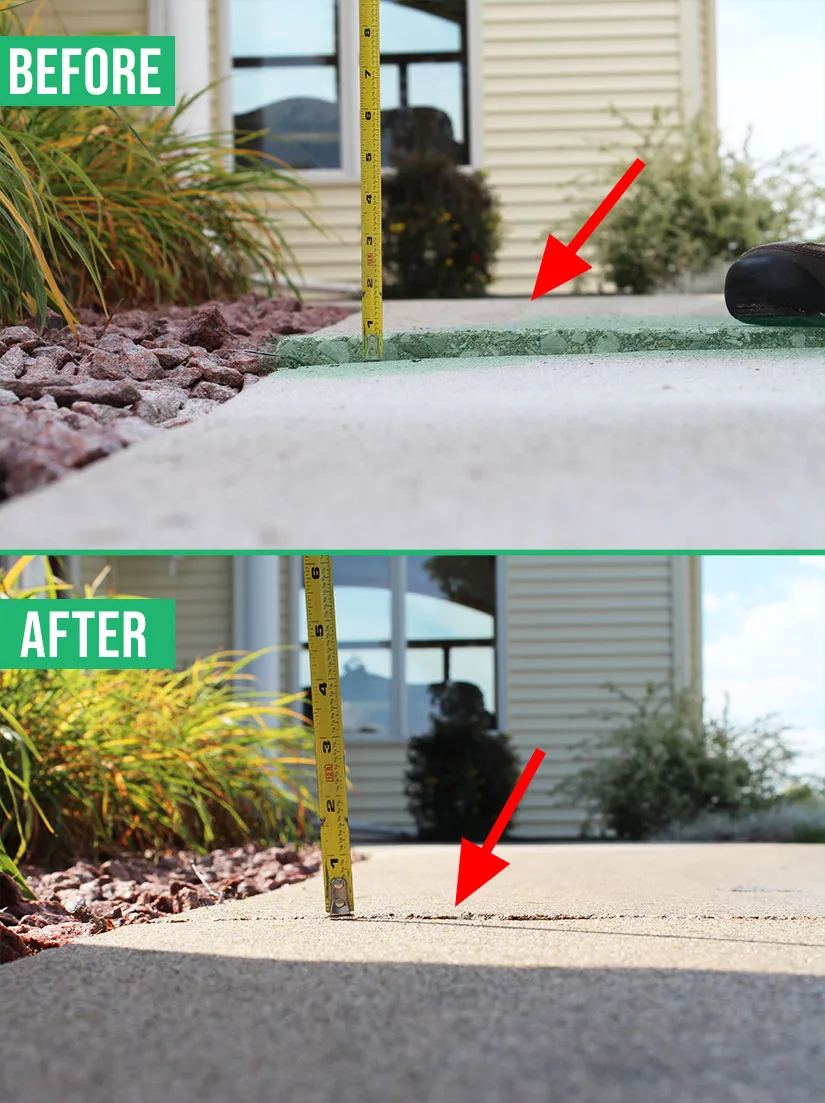
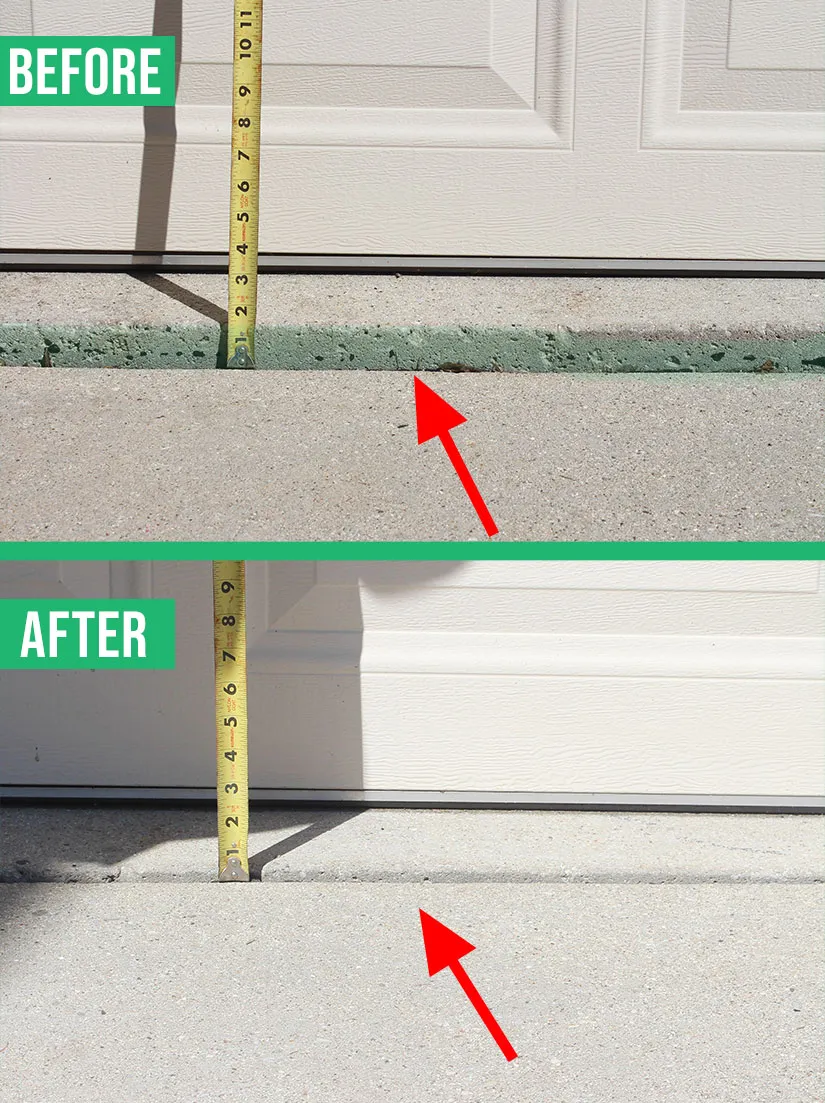
Foamjection is powered by HMI, which provides the equipment, training and systems behind every lift. Here’s what you can expect when you call us about your Charleston concrete:

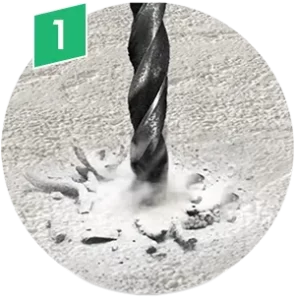 Drill Small Holes
Our crew drills small 5/8″ holes in key areas of the slab.
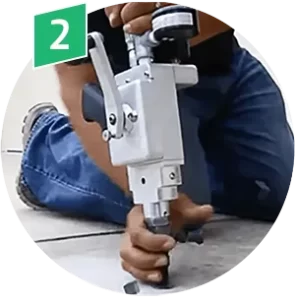 Inject High-Density Polyurethane Foam
This is the core of polyurethane concrete lifting — the foam expands beneath the slab, fills voids, stabilizes loose soils, and delivers a controlled slab lifting process.
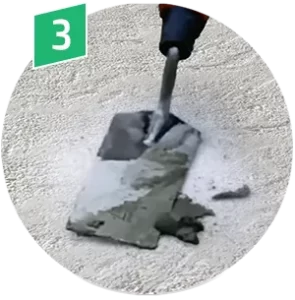 Patch & Use the Same Day
Once the slab reaches the correct height, holes are patched and the area is often ready to use within hours.
Tell us what’s sinking and where. A local pro will follow up with a free, no-pressure estimate.
Charleston sits on the low, flat ground of the Atlantic Coastal Plain. The ground under most of the area is made of young layers of sand, clayey sand and mud, laid down along old beaches, barrier islands and the marshes behind them. The U.S. Geological Survey describes the Wando Formation, one of these layers around Charleston, as mostly sand with shelly sands and muds in places, and notes that the area’s younger sediments tend to be loose or only moderately compacted. The USDA’s description of the Charleston soil series, first mapped on James Island, says these soils formed in sandy and loamy marine sediments less than 25 feet above sea level, with a seasonal high water table in winter. On the peninsula itself, much of the land is filled-in creek and marsh.
Loose sand doesn’t shrink and swell the way clay does, but it moves easily with water. Heavy rain, storm runoff and high groundwater keep the ground under slabs wet. Water running along a slab edge carries sand away and leaves a hollow, and loose sand or old fill packs down under the weight of the concrete. Either way, the slab is still in one piece, but nothing is holding it up, so it drops. Hard freezes are rare here, so the trouble is water, not frost.
Foam fills those hollows and firms up the loose soil around them, and because it is light, it doesn’t add much weight to soft, wet ground that’s already struggling.
Source: U.S. Geological Survey, Geolex entry for the Wando Formation
Source: U.S. Geological Survey, Open-File Report 99-386, digital geologic mapping of Charleston County
Source: USDA Natural Resources Conservation Service, Charleston soil series description
Source for the filled-land points: Historic Charleston Foundation, Which Areas in Charleston are Prone to Flooding and Why?
Every service below uses the same foam lifting process, sized to the slab. Not sure which one you need? Describe the problem on the estimate form and a local pro will help you figure it out.
The City of Charleston’s Streets & Sidewalks Division says it “works year-round to repair roadways, maintain sidewalks,” and it asks residents to report damaged or uneven sidewalks and sidewalk trip hazards with the street address or nearest intersection. See the City of Charleston Streets & Sidewalks page. Your own driveway, walkway, steps and patio are yours to fix, and if those slabs are intact and just sunken or tilted, ask us whether lifting is an option before you replace them.
Yes. The foam expands into empty spaces under the slab and helps stabilize loose soil, which is the usual problem when water washes sand out from under a driveway, walk or patio. Steering water away from the slab edge helps the repair last.
Concrete jacking, also called slabjacking or mudjacking, pumps a heavy cement slurry under the slab through larger holes. Foam jacking uses high-density polyurethane foam through small 5/8 inch holes. The foam is much lighter, cures quickly, and most slabs are ready to use the same day.
It helps. On Charleston’s low, flat lots, rain has nowhere to run off quickly, and water from roofs and downspouts often ends up along slab edges, where it washes sand away. Extending downspouts and keeping water from pooling against the slab keeps new hollows from forming after the concrete is lifted.
Yes. Foamjection also serves nearby communities including Mount Pleasant, North Charleston and Summerville, and farther along the coast in Georgetown, Port Royal and Hilton Head Island. You’ll find links to each area at the bottom of this page.
Fill out the estimate form on this page or call 866-913-6519. Estimates are free and no-pressure, and warranty details are explained before any work begins.
Foamjection also lifts and levels concrete in these communities near Charleston:
