
Restoring an Uneven Driveway at an Emerson Home
A homeowner in Emerson, Georgia, had a driveway that had started to settle and lose support. The uneven concrete affected the driveway’s appearance and created less consistent transitions between the slabs. A crack in the driveway also needed to be sealed.
Although the concrete had moved, the existing slabs were still in repairable condition. Instead of removing and replacing the driveway, polyurethane concrete lifting provided a practical way to raise the settled area, restore support underneath, and protect the crack.
The goal was to preserve the existing concrete while creating a smoother and more stable driveway surface.

The Challenge
The affected driveway slab had settled because it no longer had consistent support from the material beneath it.
The homeowner was dealing with:
- Settled driveway concrete
- Uneven slab transitions
- Reduced support underneath
- A crack in the driveway
- Possible water entry through the crack
- A risk of continued movement
- An uneven overall appearance
The repair needed to lift the affected concrete toward a better position and stabilize it from below. The crack also needed to be caulked after lifting to help limit water entry and leave a cleaner finished surface.
Careful control was important throughout the project so the driveway could be improved without placing unnecessary pressure on the surrounding slabs.
The Foamjection Solution
After evaluating the driveway, the local Foamjection professional recommended polyurethane foam injection followed by concrete crack caulking.
The repair addressed three related needs:
Lifting the Settled Driveway
High-density polyurethane foam was carefully injected beneath the affected concrete. As the foam expanded, it gradually raised the settled section and improved its alignment with the surrounding driveway slabs.
Stabilizing the Slab
The expanding foam moved into hidden voids beneath the concrete and restored support where the driveway had lost contact with its base. This helped stabilize the slab after it reached the best possible position.
Caulking the Crack
Once the lifting and stabilization work was complete, the driveway crack was caulked. Sealing the opening helped reduce water entry and improved the appearance of the repaired area.
This targeted approach preserved the driveway while avoiding the cost, mess, and downtime associated with complete concrete replacement.
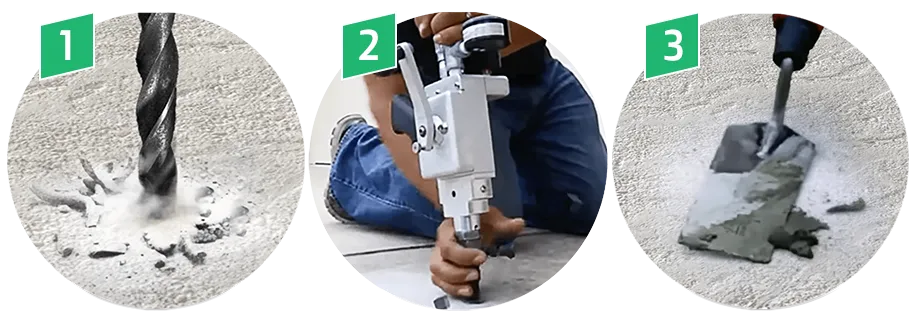
The Fix: 3-Step Process
Step 1: Drill
Small access holes, approximately 5/8 inch in diameter, were drilled at carefully selected points in the settled driveway slab.
Step 2: Pump
High-density polyurethane foam was injected beneath the concrete. As it expanded, the foam filled underground voids, restored support, and carefully lifted the affected driveway section.
Step 3: Patch and Caulk
After the concrete was lifted and stabilized, the injection holes were patched and the driveway crack was caulked. The work area was cleaned, and the driveway was ready for normal use shortly afterward.
The Results
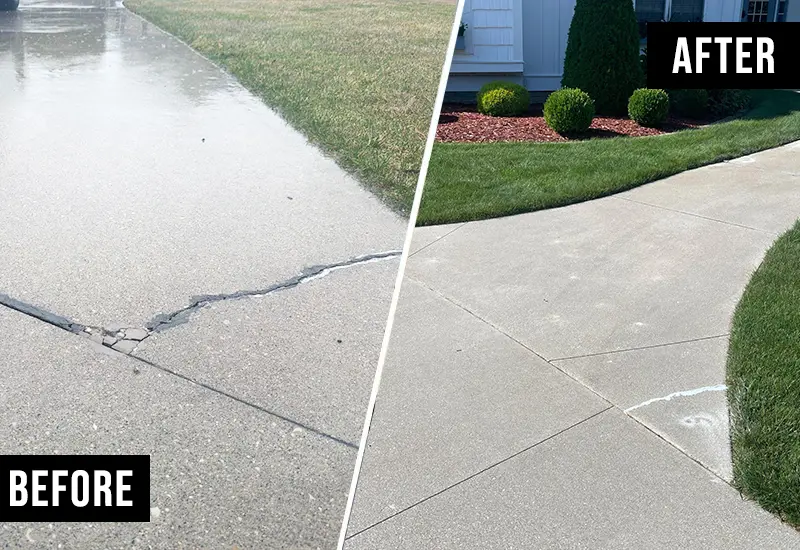
The completed repair improved the driveway’s position, support, and finished appearance while keeping the existing concrete in place.
The repaired driveway is now:
- Closer to its proper position
- Better aligned between slabs
- More evenly supported underneath
- More stable for everyday use
- Protected along the caulked crack
- Less vulnerable to water entry
- Less likely to continue moving
Most importantly, the process addressed both the visible unevenness and the missing support beneath the slab. Caulking the crack provided added protection by helping keep surface water from reaching the base below.
The homeowner received a focused driveway repair without the disruption and expense of tearing out otherwise usable concrete.
Why Driveways Settle and Crack in Emerson, GA
Driveway settlement usually begins below the concrete. Several conditions can cause the soil or base material to shift, compress, or wash away:
- Poorly compacted fill soil
- Heavy Georgia rainfall
- Water entering through open cracks
- Erosion beneath slab edges
- Voids below the driveway
- Repeated vehicle loads
- Seasonal changes in soil moisture
When the supporting material changes, the heavy concrete can sink into the empty spaces below. Uneven support can also place stress on the slab and contribute to cracking.
Polyurethane concrete lifting addresses the problem beneath the surface by filling voids and restoring support. Caulking cracks afterward helps limit water entry that could contribute to future soil erosion.
Concrete Driveway Lifting in Emerson, GA
A settled or cracked driveway does not always need to be replaced. If the existing slabs remain repairable, polyurethane foam can lift the concrete and restore support with less disruption.
Learn more about concrete lifting in Emerson, GA if your driveway has:
- Settled concrete sections
- Uneven joints between slabs
- Cracks allowing water entry
- Hidden voids beneath the surface
- Rough walking or driving transitions
- Signs of continued movement
Foamjection connects homeowners with qualified local professionals who can evaluate sinking concrete and recommend the right repair. Request a free quote to find out whether your driveway can be lifted and stabilized instead of replaced.
