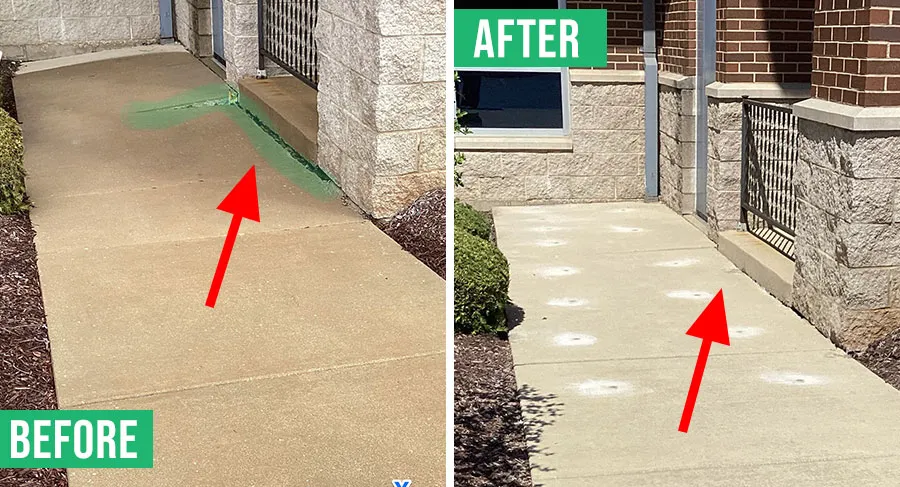
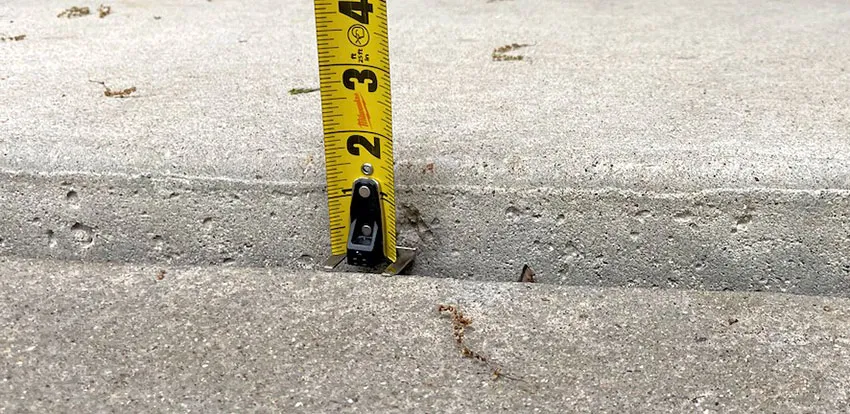
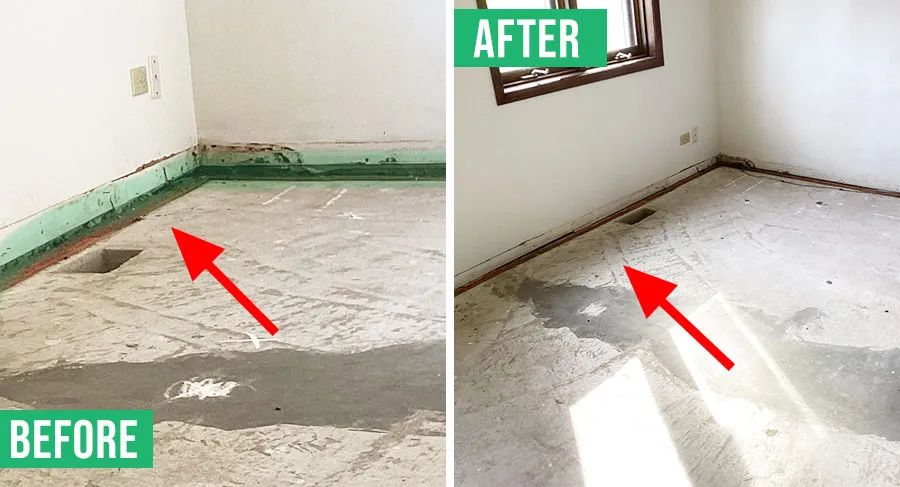
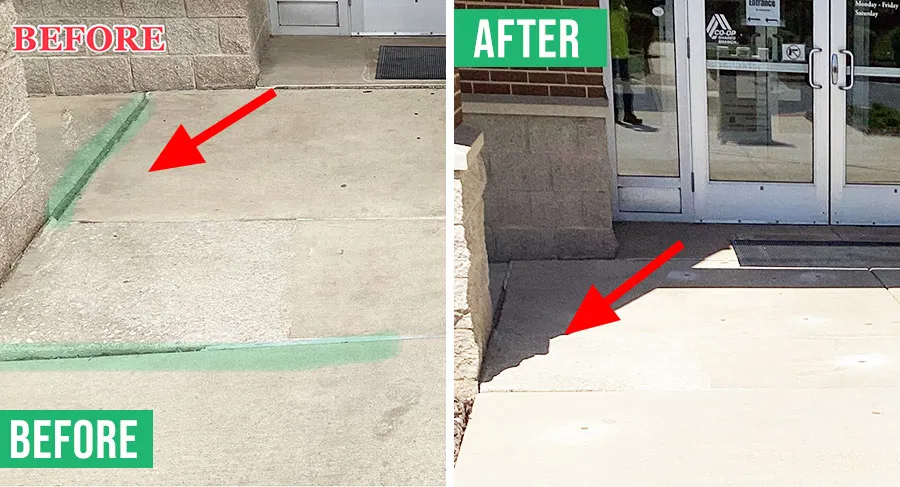
Uneven factory floors can interfere with production, create safety risks for employees, and affect how equipment operates. Settled concrete can lead to triphazards, vibrationinmachinery, and water pooling in low areas. Over time, these issues can slowworkflows, increase wear on equipment, and raise maintenance and liability concerns.
Foamjection quicklyliftssunkenfactoryfloorslabs back into position without removing or replacing the concrete. Our polyurethane concrete lifting process restores support beneath the slab, improves floor stability, and helps keepoperationsrunning with minimal disruption—often completed quickly and without shutting down production.
Why Factory Floors Sink
Factory floors sink when the soil beneath the slab loses stability. Common causes include:
Soil erosion beneath large slab areas
Heavy machinery and constant load stress
Poor drainage under the floor
Long-term soil movement
Voids forming beneath the concrete
As support weakens, slabs settle unevenly and create safety and performance issues.
Signs Your Factory Floor Needs Leveling
You may need factory floor leveling if you notice:
Uneven or sunken floor sections
Equipment vibration or misalignment
Gaps or uneven joints between slabs
Water pooling on the floor
Increased wear on machinery or carts
Addressing these issues early helps maintain productivity and reduce downtime.
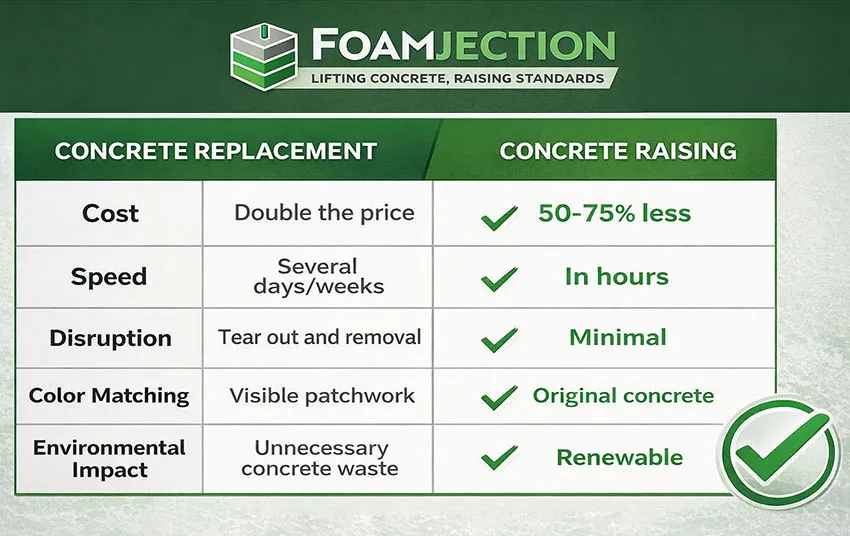
With Foamjection, you get: A solution that costs 50–70% less A Process completed in hours, not days A precise, durable slab lifting solutionEco-friendly materialsLocal certified expertise
Edit Template
Our Fix: Polyurethane Factory Floor Leveling
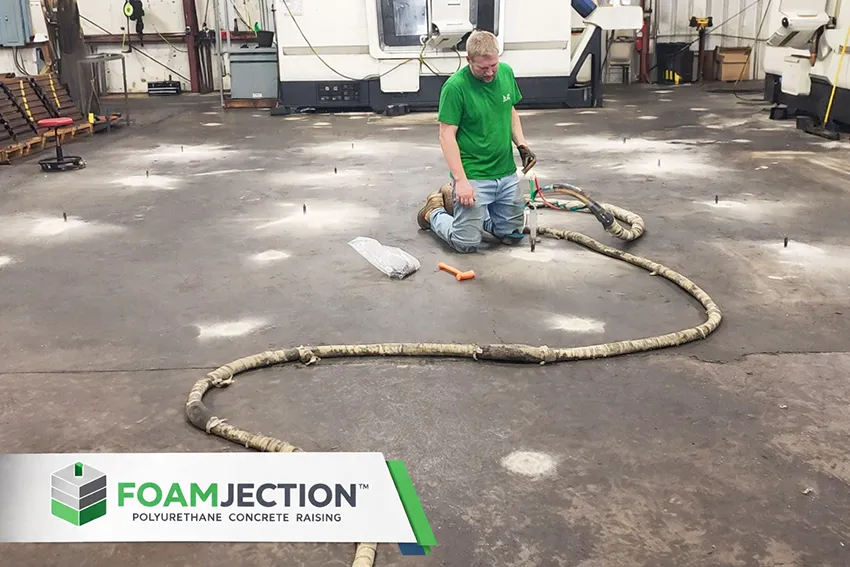
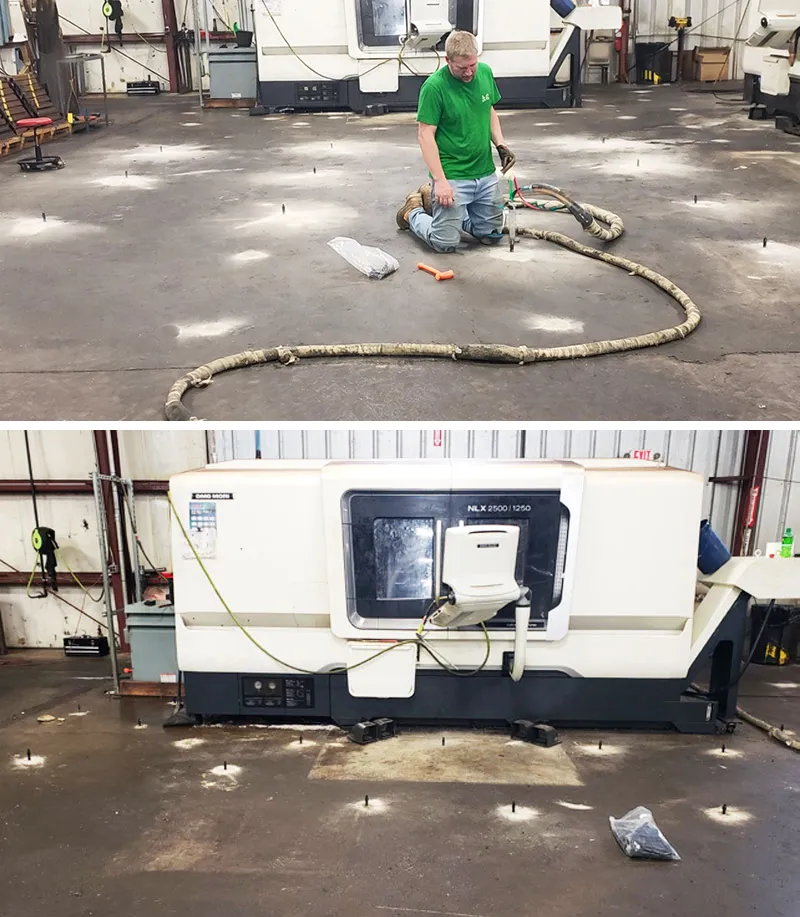
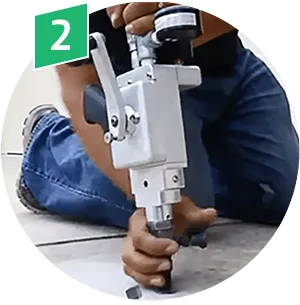
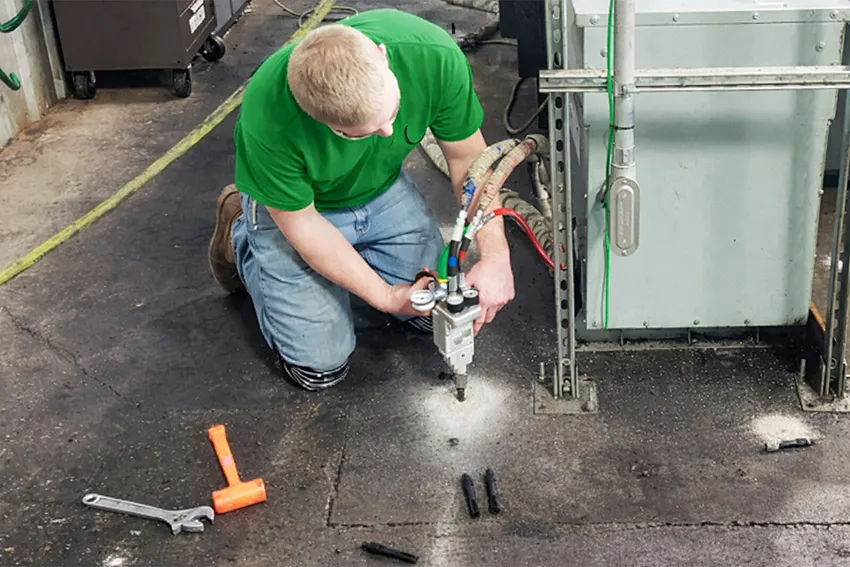
Foamjection levels factory floors by injecting high-density polyurethane foam beneath the slab. The foam expands to fill voids, lift the concrete, and restore firm support below the surface.
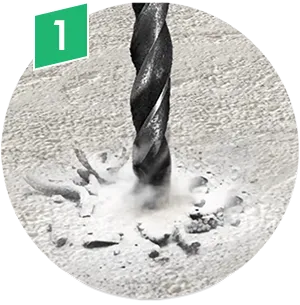
Small access holes are drilled
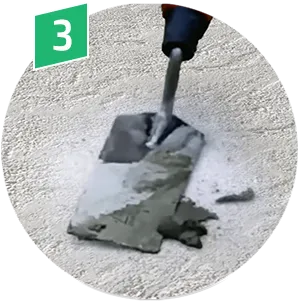
Foam is injected beneath the factory floor
The slab is lifted and stabilized
Holes are patched after lifting
Most factory floor leveling projects are completed efficiently, and many surfaces are ready for use the same day.
Why Property Owners Choose Factory Floor Leveling
Property owners choose factory floor leveling because it corrects uneven slabs without extended shutdowns or demolition. Lifting restores safe working surfaces and helps protect equipment and production flow.
Costs less than replacement
No tear-out or heavy equipment
Minimal disruption to operations
Fast completion time
Long-term support under the slab
For factory floors that are intact but uneven, leveling is often the most practical solution.
The Benefits of Foam Factory Floor Leveling
Reduced downtime
Improved safety for workers and equipment
Lightweight foam that does not overload soil
Water-resistant material
Controlled, precise lifting
Factory Floor Leveling Questions
What causes factory floors to settle?
Factory floors settle due to soil erosion, heavy equipment loads, poor drainage, and long-term soil movement beneath large slabs.
Is factory floor leveling better than replacement?
In many cases, yes. Leveling costs far less, takes far less time, and avoids major disruption to operations.
Is polyurethane foam strong enough for constant industrial traffic?
Yes. High-density polyurethane foam is designed to support industrial loads and frequent traffic. It restores firm support beneath the slab without adding excess weight to the soil.
How long does factory floor leveling take?
Most factory floor leveling repairs only take a few hours – in one visit. We do our best to schedule around your operations, so you stay up and running.
Will production need to stop during leveling?
In most cases no. Most jobs are completed in a few hours, and we do our best to keep your operations running like normal.
Can leveling be done around fixed equipment and production lines?
In many cases, yes. Repairs can often be performed around fixed equipment and production areas. The approach depends on slab conditions and load requirements, which are reviewed during the evaluation.
Does it create odors or fumes inside the facility?
No. The eco-friendly polyurethane foam is injected beneath the concrete and cures quickly. It does not produce lingering odors or fumes, making it safe for indoor factory environments.
Are the repair holes noticeable after leveling?
The holes are small and patched after lifting.
Can leveling help reduce vibration affecting machinery or conveyors?
Yes. Uneven or unsupported slabs can contribute to vibration issues. By restoring support beneath the floor, Foamjection can help create a more stable surface and reduce vibration caused by settlement.
Will leveling help reduce trip hazards around workstations and walkways?
Yes. Leveling removes uneven transitions and low spots, helping improve safety around workstations, walkways, and high-traffic areas.
Can leveling improve floor drainage?
Yes. Leveling restores proper slope so water drains correctly across the floor.
How do I get a FREE estimate?
Easy. Request a FREE estimate by visiting our Contact Us page.
Our team will review your request and explain the next steps.
What locations does Foamjection serve?
Foamjection provides commercial concrete lifting in multiple states across the U.S., including Texas, Colorado, Florida, Georgia, Illinois, Wisconsin, and surrounding areas. To see the full list of states and service coverage, visit our Service Area page.