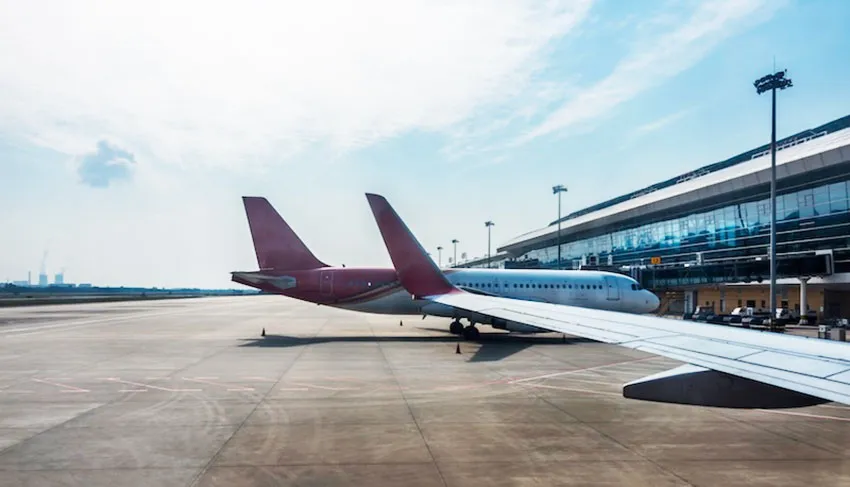
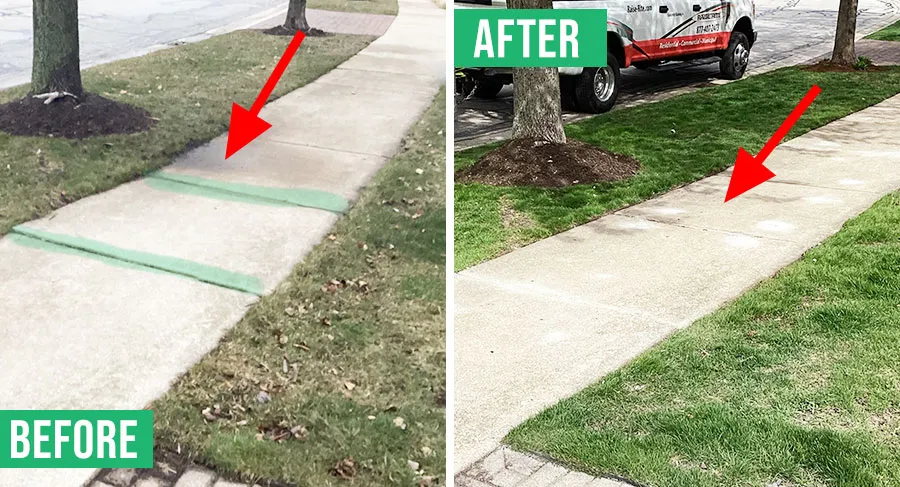
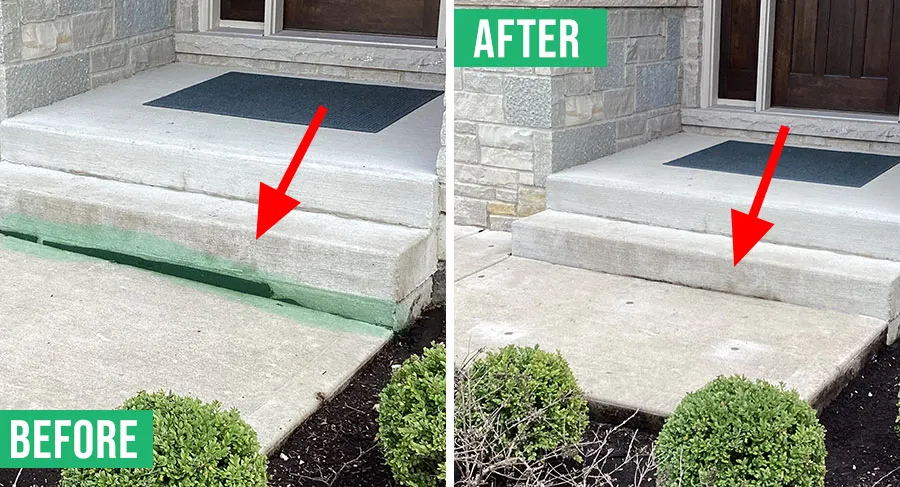
Uneven concrete at airports is more than a surface issue — it’s a safety and operational concern. Settlement in runways, taxiways, aprons, and hangar areas can affect aircraft movement, ground handling equipment, drainage, and surface transitions. Left unaddressed, even small elevation changes can lead to long-term damage and increased maintenance demands.
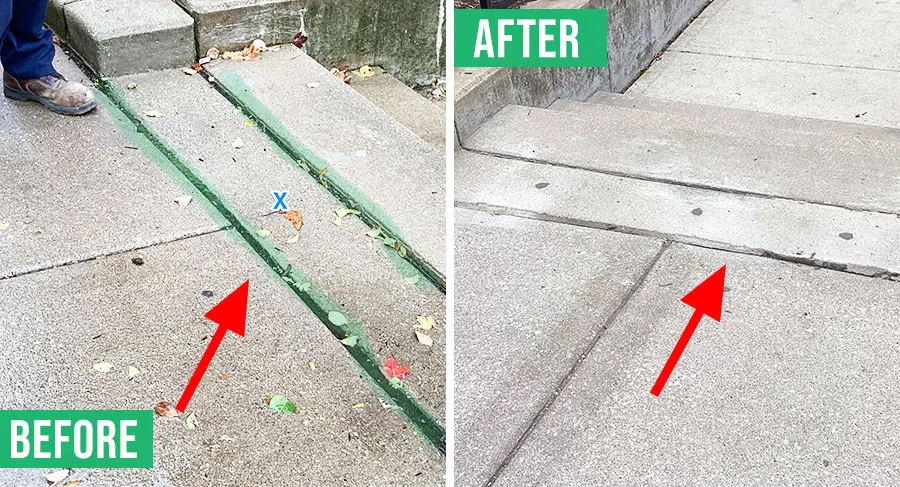
Foamjection lifts sunken airport concrete back into position without removing or replacing large slabs. Our polyurethane concrete lifting process restores support beneath the surface, corrects settlement, and improves drainage — all with a controlled approach that helps airports address problem areas efficiently while minimizing disruption to operations.
Why Airport Runways & Hangars Sink
Airport concrete sinks when the soil beneath it loses stability. Common causes include:
Soil erosion beneath large slab areas
Heavy aircraft and service vehicle loads
Poor drainage below runways and hangars
Long-term soil movement
Voids forming under the concrete
As support weakens, slabs settle unevenly and create safety and performance concerns.
Signs Your Runway or Hangar Needs Leveling
You may need leveling if you notice:
Uneven runway or taxiway sections
Aircraft or equipment jolting during movement
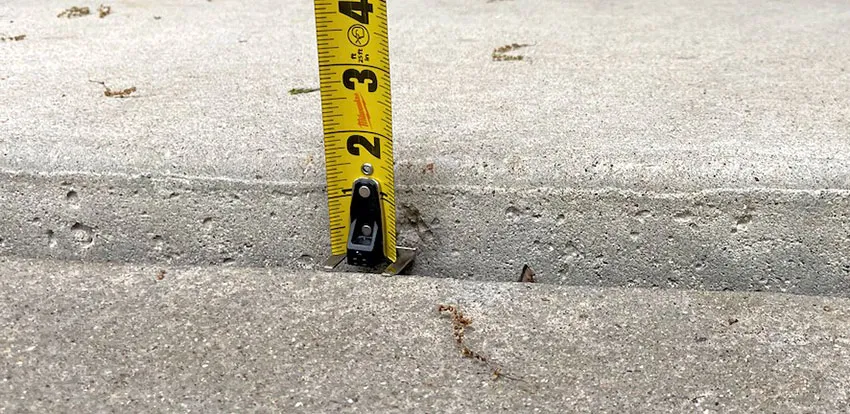
Gaps or height differences between slabs
Water pooling on concrete surfaces
Cracks caused by settlement
Early repair helps maintain safe operations and reduce long-term surface damage.
With Foamjection, you get: A solution that costs 50–70% less A Process completed in hours, not days A precise, durable slab lifting solutionEco-friendly materialsLocal certified expertise
Edit Template
Our Fix: Polyurethane Airport Concrete Leveling
Foamjection levels airport runways and hangars by injecting high-density polyurethane foam beneath the slab. The foam expands to fill voids, lift the concrete, and restore firm support below the surface.
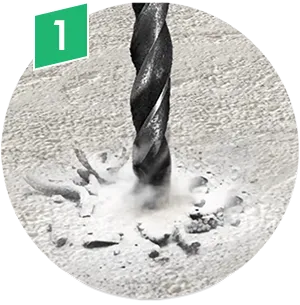
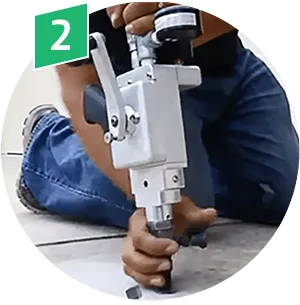
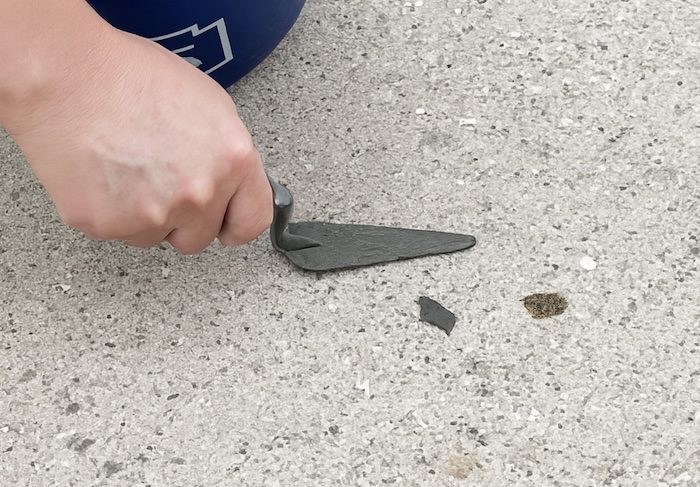
Small access holes are drilled
Foam is injected beneath the runway or hangar slab
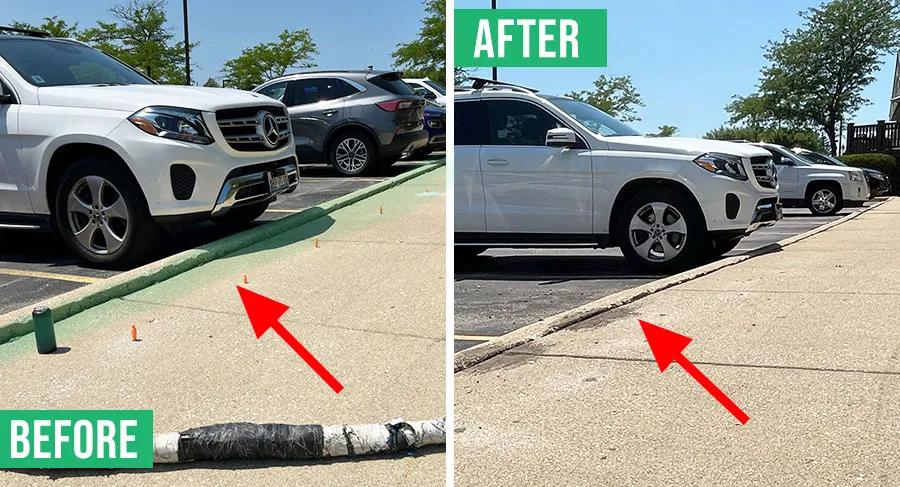
The concrete is lifted and stabilized
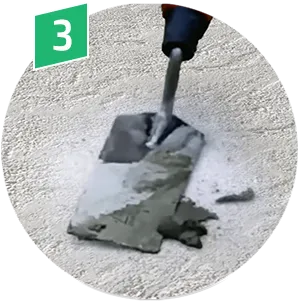
Holes are patched after lifting
Most airport leveling projects are completed efficiently, and many surfaces are ready for use the same day.
Airport operators choose concrete leveling because it corrects uneven surfaces without extended closures or full slab replacement. Lifting restores smooth transitions, improves drainage, and supports safe aircraft movement.
Costs less than replacement
No tear-out or heavy equipment
Minimal disruption to operations
Fast completion time
Long-term support under the slab
For airport concrete that is intact but uneven, leveling is often the most practical solution.
The Benefits of Foam Airport Concrete Leveling
Improved safety for aircraft and ground crews
Reduced downtime and surface closures
Lightweight foam that does not overload soil
Water-resistant material
Controlled, precise lifting
Airport Runways & Hangars Leveling Questions
What causes airport concrete to settle?
Airport concrete settles due to soil erosion, poor drainage, repeated aircraft loading, and long-term soil movement beneath large slabs. Water intrusion beneath pavement is a common contributor, especially in high-traffic areas.
Is leveling a better option than replacing airport concrete?
In many cases, yes. When the concrete is still structurally sound, leveling restores the slab without demolition. This reduces cost, shortens repair timelines, and avoids the disruption of removing and replacing large pavement sections.
Can foam leveling support aircraft weight?
Yes. High-density polyurethane foam is engineered to restore firm support beneath large slabs and is suitable for areas exposed to aircraft loads and heavy ground support equipment when properly designed and installed.
How long does airport concrete leveling take?
Many airport leveling projects can be completed efficiently, often within hours depending on the size and scope of the repair. Because the foam cures quickly, treated areas are typically ready for use immediately once cleared.
Will airport operations need to stop during repairs?
In many cases, no. Work can often be scheduled in phases or during planned maintenance windows. We do our best to work around operational requirements and keep airfield activity moving whenever possible.
Are the repair holes noticeable after leveling?
The access holes are small and carefully placed. After lifting, they are patched to blend with the surrounding surface. They are minimal compared to the surface disruption caused by full concrete replacement.
Does leveling improve drainage on runways and aprons?
Yes. Leveling raises low areas and helps restore proper slope, allowing water to drain as intended instead of pooling on pavement surfaces.
How do I request a free estimate for airport concrete leveling?
Getting started is simple. Contact Foamjection to schedule an evaluation, and we’ll review the affected areas, slab conditions, and operational requirements. You’ll receive a clear, no-obligation estimate with recommended next steps.
What locations does Foamjection serve?
Foamjection provides commercial concrete lifting in multiple states across the U.S., including Texas, Colorado, Florida, Georgia, Illinois, Wisconsin, and surrounding areas. To see the full list of states and service coverage, visit our Service Area page.