
When concrete sinks, two repair methods are often considered: poly leveling and mudjacking. Both aim to lift settled concrete, but they work very differently and deliver very different results.
Understanding these differences helps property owners choose the right solution for long-term stability.
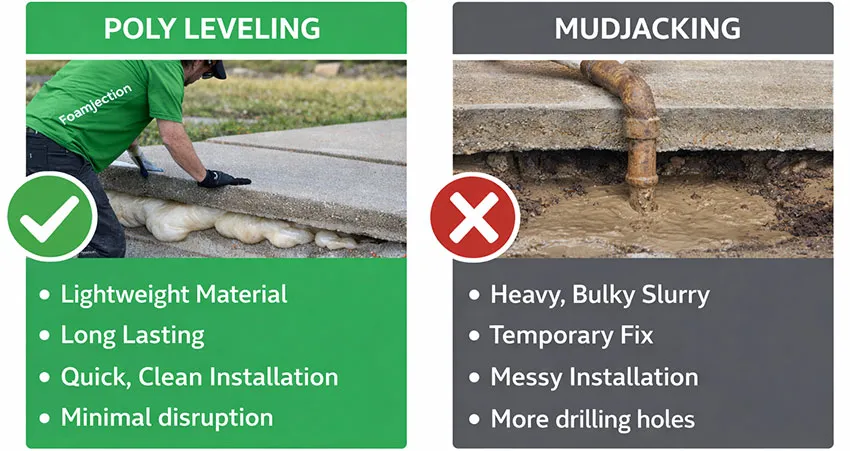
Poly leveling uses high-density polyurethane foam to lift and support sunken concrete. The foam is injected beneath the slab, where it expands, fills voids, and raises the concrete into place.
This method is also known as polyjacking or foam concrete leveling.
Mudjacking uses a slurry made of soil, sand, cement, and water. This mixture is pumped under the slab to lift it.
Mudjacking has been used for decades, but the material and process come with limitations.
| Feature | Poly Leveling | Mudjacking |
|---|---|---|
| Material | Polyurethane foam | Cement-based slurry |
| Weight | Lightweight | Heavy |
| Cure Time | Fast | Slower |
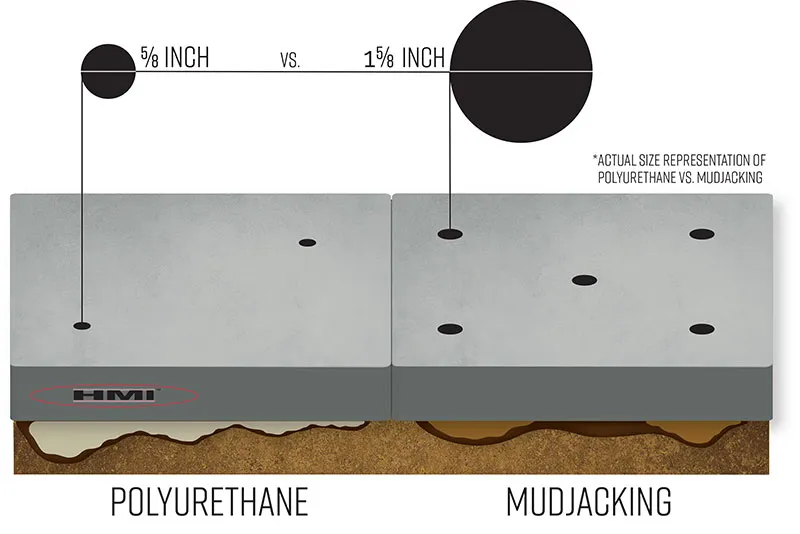
| Hole Size | Small | Larger |
| Water Resistance | Yes | No |
| Long-Term Stability | High | Lower |
Soil is often the reason concrete sinks. Adding heavy material back into weak soil can cause further settlement.
Poly leveling foam is lightweight. It lifts the slab without adding stress to the soil.
Mudjacking adds significant weight beneath the slab. Over time, this extra load can cause the concrete to sink again.
Poly leveling allows controlled lifting. The foam expands gradually and can be adjusted during the process.
Mudjacking is harder to control. The slurry flows freely and may lift unevenly or overshoot the target height.
Polyurethane foam does not absorb water. It resists erosion and stays in place even in wet conditions.
Mudjacking material contains soil and cement. Water can wash it out over time, especially in areas with drainage issues.
Poly leveling uses small injection holes. These holes are patched after lifting and are less noticeable.
Mudjacking requires larger holes to move thick slurry. These patches are more visible after repair.
Poly leveling cures quickly. Many surfaces can be used the same day.
Mudjacking takes longer to cure. Some areas may need extended downtime before use.
Poly leveling is designed for long-term support. The foam keeps its shape and strength after installation.
Mudjacking material can break down, shift, or wash away, which may require future repairs.
Mudjacking can still be applied in certain situations, such as temporary fixes or low-use areas. However, it is often chosen based on cost alone rather than long-term performance.
Foamjection uses poly leveling because it provides:
For most residential, commercial, and municipal concrete repairs, poly leveling offers a more reliable solution.
If your concrete is intact but has settled due to soil issues, poly leveling is often the better choice. It fixes the problem at the source without replacing the slab.
Foamjection evaluates each project carefully to determine the best repair approach based on site conditions and slab performance.
Whether your driveway is sinking, your sidewalk is a trip hazard, or your patio is dropping near the foundation, Foamjection delivers a fast, clean, cost-effective fix using proven foam lifting technology.
